A pinched or overly narrow nose creates an unnatural, skeletal appearance that screams “bad surgery.” Your middle vault (the area between your eyes and tip) appears excessively narrow, creating visible indentations or an inverted-V deformity. Worse, you can’t breathe properly-your nasal sidewalls collapse inward with every breath, especially during exercise.
Dr. David N. Sayah is a board-certified plastic surgeon with fellowship training in advanced endoscopic techniques and over 15 years of experience specializing in procedures for men. He has extensive expertise in complex revision rhinoplasty, including pinched nose correction-one of the most challenging reconstructive procedures in facial plastic surgery. His exclusive focus on male patients throughout Los Angeles and Beverly Hills has made him an expert in restoring natural nasal width while maintaining masculine proportions.
Pinched nose deformities almost always result from previous rhinoplasty complications. A prior surgeon over-reduced your cartilage or narrowed your bones too aggressively, leaving you with inadequate structural support. Correcting this requires sophisticated reconstruction techniques using cartilage grafts to rebuild what was lost.
I had my rhinoplasty with Dr Sayah and could not be happier. The result is exactly what I wanted, natural and balanced. His team at Simply Males made the entire process smooth and professional. Thank you all!
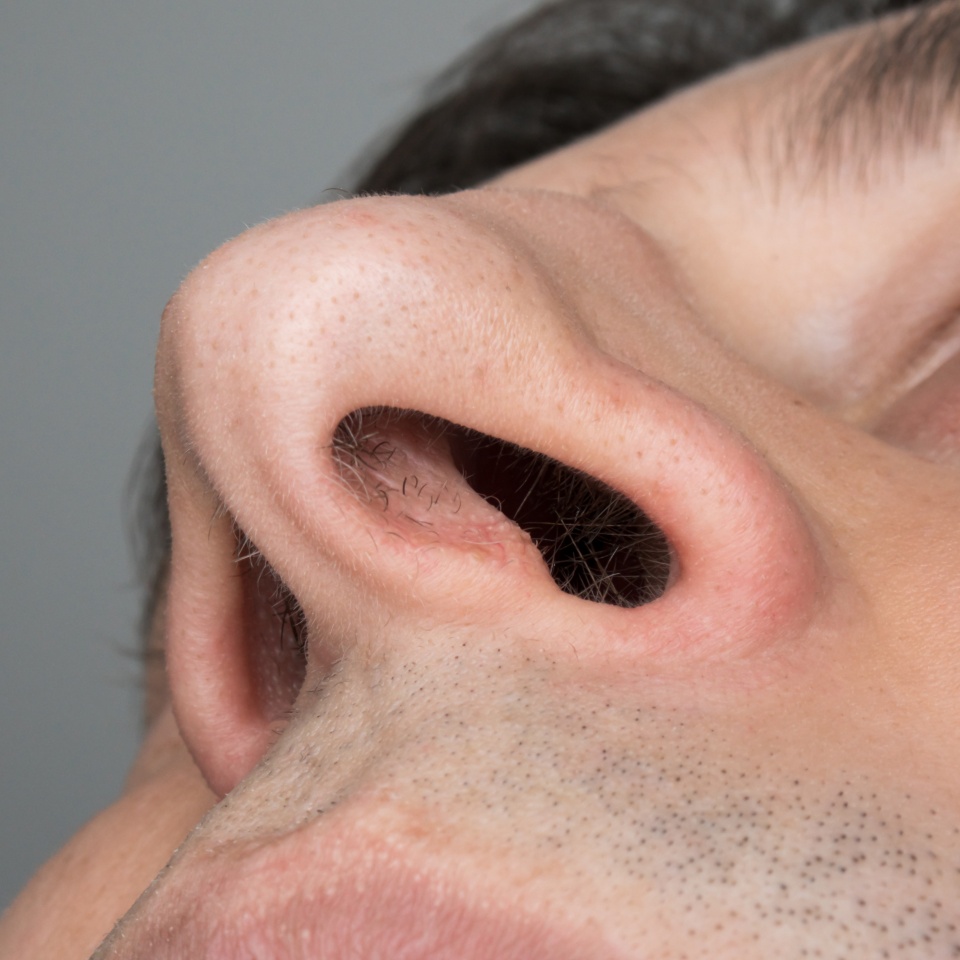
Understanding Pinched Nose Deformity in Men
A pinched nose (also called narrow nose or collapsed middle vault) describes excessive narrowing of your nasal bridge that creates both aesthetic and functional problems. The condition manifests in several characteristic ways:
- Middle Vault Pinching: The mid-nasal bridge appears excessively narrow, creating an inverted-V deformity. When you look at your nose from the front, you can see visible indentations where the bones meet the cartilage-creating a shape that looks like an upside-down V.
- Alar Collapse: Your nasal sidewalls cave inward during breathing, affecting airflow significantly. This is especially noticeable during deep breaths or exercise when your air demand increases.
- Internal Valve Collapse: Severe breathing obstruction, particularly during physical activity. Your internal nasal valves (the narrowest part of your airway) are too narrow to allow adequate airflow.
- Tip Pinching: Excessive refinement created an unnatural, overly narrow nasal tip that looks pinched and unnatural rather than appropriately refined.
- Visible Irregularities: You can see the edges of your nasal bones or cartilages creating ridges or shadows under your skin-the hallmark of over-aggressive reduction.
Common causes of pinched noses:
- Over-aggressive cartilage removal during previous rhinoplasty
- Excessive narrowing during hump removal without adequate structural support
- Inadequate or absent structural grafting during initial surgery
- Aggressive osteotomies (bone fractures) that collapsed bones too far inward
- Multiple previous surgeries that progressively weakened structures
Why Men Seek Pinched Nose Correction in Los Angeles
Men pursue narrow nose repair when the deformity affects both appearance and breathing:
Unnatural Appearance
Your nose looks obviously surgical—pinched, skeletal, or over-refined. Instead of appearing naturally good-looking, it screams “bad rhinoplasty.” This affects your confidence in every professional and social setting.
Severe Breathing Problems
You can’t breathe properly through your nose, especially during exercise or sleep. Your sidewalls collapse with each breath. You find yourself mouth-breathing constantly, which is uncomfortable and embarrassing.
Inverted-V Deformity
The visible V-shaped indentation where your bones meet your cartilage creates an obvious cosmetic deformity. This is particularly noticeable in certain lighting or from certain angles.
Professional Impact
In business environments, the obvious surgical appearance can undermine your credibility. You look like you’ve had bad cosmetic work rather than presenting a natural, confident image.
Regret From Previous Surgery
You underwent rhinoplasty expecting improvement but ended up worse than before. The surgeon over-reduced your nose, leaving you with this pinched, collapsed appearance.
Quality of Life Issues
Constant breathing difficulty affects sleep quality, exercise capacity, and daily comfort. The combination of aesthetic and functional problems significantly impacts your overall wellbeing.
“Correcting a pinched nose represents one of revision rhinoplasty’s most challenging procedures,” explains Dr. Sayah. “The problem is not just cosmetic. Most patients have severe breathing difficulties affecting quality of life. Successful correction requires rebuilding structural support using cartilage grafts while widening the narrowed areas. My extensive experience with complex revision cases allows me to restore both appearance and function even in severely compromised noses.”
Male-Specific Pinched Nose Reconstruction Techniques
Repairing a pinched nose requires sophisticated reconstruction that rebuilds what previous surgery destroyed:
Spreader Graft Placement
The cornerstone of pinched nose correction involves placing spreader grafts to widen your middle vault and restore internal valve function:
- What They Are: Spreader grafts are thin strips of cartilage placed along each side of your septum, extending from between your eyes down toward your tip.
- What They Do: These grafts physically push your nasal sidewalls outward, widening the internal valve and preventing collapse. They create structural support that maintains this width permanently.
- Materials Used: Typically harvested from your septum if adequate cartilage remains. If not, ear cartilage or rib cartilage may be used depending on how much material is needed.
- Results: Immediate improvement in breathing as the internal valve is widened. Gradual cosmetic improvement as the middle vault appears more natural and less pinched.
Alar Batten Grafts
When your external nasal valves (sidewalls) collapse during breathing, alar batten grafts provide critical support:
- Horizontal Reinforcement: These horizontal grafts are placed along your upper lateral cartilages (the side cartilages), reinforcing the lateral nasal walls.
- Preventing Collapse: They act like internal splints, preventing your sidewalls from caving inward during inhalation.
- Functional Improvement: Most men notice dramatic breathing improvement once these support structures are in place.
Butterfly Grafts for Alar Support
Specially shaped cartilage grafts positioned to support your alar sidewalls when collapse is severe:
- Unique Shape: Named for their butterfly-like appearance, these grafts provide targeted support exactly where your sidewalls collapse.
- Strategic Placement: Positioned to prevent the specific collapse pattern you experience during breathing.
- Breathing Restoration: Eliminates the frustrating collapse that occurs with every deep breath.
Lateral Crural Strut Grafts
When your nasal tip appears pinched from over-aggressive previous surgery, lateral crural grafts restore width:
- Tip Widening: Cartilage grafts placed within your tip cartilages to widen an overly narrow tip.
- Structural Support: Prevents recurrent pinching while creating more natural tip width.
- Masculine Proportions: Ensures your tip maintains adequate size appropriate for masculine faces-not feminine over-refinement.
Osteotomies for Width Restoration
When over-aggressive bone narrowing created pinching, outfracture osteotomies can widen your upper nose:
- Controlled Bone Fractures: Your nasal bones are carefully fractured to allow them to move outward.
- Symmetric Widening: Both sides are widened equally to restore natural proportions.
- Upper Vault Correction: Addresses pinching in the bony upper portion of your nose.
Cartilage Harvest for Reconstruction
Pinched nose correction requires substantial cartilage for all these grafts. Dr. Sayah uses three primary sources:
- Septal Cartilage: Used first if adequate tissue remains from previous surgery. Many revision patients have depleted septal cartilage.
- Ear Cartilage: Provides moderate volume for less extensive reconstructions. Harvested from behind your ear where scars are hidden.
- Rib Cartilage: Required for most pinched nose corrections due to the substantial grafting needed. Provides abundant, strong material for comprehensive reconstruction.
What Pinched Nose Repair Addresses
Narrow nose correction creates comprehensive improvement:
Restored Width
Widen your middle vault to natural proportions, eliminating the pinched or skeletal appearance.
Breathing Restoration
Open collapsed internal and external valves, dramatically improving airflow and eliminating breathing difficulties.
Eliminated Deformity
Correct the inverted-V deformity and other visible irregularities that make previous surgery obvious.
Natural Appearance
Create a nose that looks naturally good rather than obviously surgical-the way it should have looked from your first surgery.
Functional Improvement
Restore normal breathing capacity for exercise, sleep, and daily activities without constant mouth-breathing.
Quality of Life
Eliminate the combined aesthetic and functional problems that have been affecting your confidence and daily comfort.
The Pinched Nose Repair Procedure
Dr. Sayah performs all pinched nose reconstruction at his fully accredited surgery center in Beverly Hills. This is complex revision surgery requiring extensive structural grafting:
- Approach: Open rhinoplasty approach provides the visualization necessary for extensive reconstruction and precise graft placement.
- Duration: Typically 3-4 hours depending on the extent of reconstruction needed. If rib cartilage harvest is required, add approximately 45 minutes.
- Anesthesia: General anesthesia ensures your comfort throughout this extensive procedure.
- Technique: Dr. Sayah harvests adequate cartilage (often from rib), carefully places spreader grafts along your septum, adds batten grafts to support sidewalls, reconstructs tip structures if needed, and performs any necessary osteotomies to widen the upper nose.
You’ll rest in the recovery suite for several hours before being discharged home with comprehensive post-operative instructions.
Combining Pinched Nose Repair With Other Corrections
Many men need additional corrections beyond just widening:
- Hump removal if over-reduction created an irregular bridge
- Tip refinement to address over-resection or asymmetry
- Septoplasty to correct deviated septum
- Nostril reduction if previous surgery created imbalance
- Comprehensive revision addressing all problems from previous surgery
Dr. Sayah will evaluate all issues during consultation and create a comprehensive surgical plan addressing everything in a single procedure.

Recovery After Male Pinched Nose Correction
Recovery from pinched nose correction typically involves more swelling and longer healing than primary rhinoplasty due to the extensive grafting:
- First Week: You’ll wear a nasal splint that protects your reconstructed structures. Expect more swelling than primary rhinoplasty due to extensive grafting. If rib cartilage was used, you’ll have some chest tenderness well-controlled with medication. Splint removal around day 7 reveals your widened nose, though significant swelling obscures refined contours.
- Weeks 2-4: Progressive swelling reduction allows increasingly apparent widening. Many men notice breathing improvement immediately despite swelling-a dramatic relief after months or years of obstruction. Most men return to work within 2-3 weeks.
- Months 2-6: Continued gradual improvement as swelling slowly resolves. Your widened middle vault becomes clearly apparent with eliminated pinching. Breathing reaches maximum improvement as internal swelling resolves.
- Months 6-12: Final refinement occurs as the last traces of swelling disappear. Grafts fully integrate with surrounding tissues, becoming permanent parts of your nasal structure. Your nose assumes its permanent widened contour with natural appearance.
Men with extensive grafting, particularly those requiring rib cartilage, may need 12-18 months for complete swelling resolution and final results to emerge fully. The wait is worth it-you’ll finally have the nose you should have gotten from your first surgery.
Frequently Asked Questions About Pinched Nose Correction
-
Common signs include excessively narrow appearance particularly in the middle third, visible inverted-V deformity (especially in certain lighting), breathing difficulties worsening during exercise, sidewalls that visibly collapse during deep breathing, and an unnatural over-refined appearance that looks obviously surgical. If you’re experiencing these issues after previous rhinoplasty, you likely have a pinched nose requiring reconstruction.
-
Yes, pinched noses can be corrected through revision rhinoplasty with structural grafting. While this represents technically challenging surgery requiring an experienced revision specialist, excellent functional and aesthetic outcomes are achievable. The key is choosing a surgeon with extensive experience in complex nasal reconstruction who understands how to rebuild compromised structures.
-
No, the goal of pinched nose correction is restoring natural proportions–not creating excessive width. Dr. Sayah carefully calibrates widening to achieve normal appearance appropriate for your facial structure and masculine proportions. You’ll look naturally good, not artificially wide.
-
Most men report dramatic breathing improvement, often describing results as life-changing. After months or years of struggling to breathe through your nose, the relief is immediate and profound. Properly performed correction typically restores breathing capacity to normal levels, allowing you to exercise comfortably, sleep better, and function without constant mouth-breathing.
-
Many pinched nose corrections require rib cartilage due to depleted septal cartilage from previous surgeries and the substantial grafting needed for adequate reconstruction. If you’ve had multiple previous surgeries, rib cartilage is almost always necessary. While this adds a harvest site and slightly longer surgery, the abundant material allows comprehensive reconstruction that wouldn’t be possible otherwise.
-
Many men notice improved breathing immediately after surgery despite swelling–the relief of having open internal valves is apparent right away. Maximum breathing improvement occurs by 2-3 months once internal swelling fully resolves. This dramatic functional improvement is often the most life-changing aspect of the surgery.
Why Choose Simply Males for Pinched Nose Repair in Beverly Hills
- Revision Rhinoplasty Expertise: Dr. Sayah has extensive experience with complex revision cases, including pinched nose correction. This is one of the most challenging procedures in rhinoplasty, requiring sophisticated reconstruction skills that only experienced revision specialists possess.
- Structural Grafting Mastery: Successful pinched nose correction requires expert cartilage grafting techniques-spreader grafts, batten grafts, strut grafts, and more. Dr. Sayah’s extensive training ensures optimal graft placement and long-term stability.
- Rib Cartilage Experience: Most pinched nose corrections require rib cartilage harvest. Dr. Sayah has performed countless rib harvests, minimizing donor site discomfort while obtaining optimal cartilage for reconstruction.
- Functional Priority: We understand that breathing restoration is often more important than aesthetics. Dr. Sayah prioritizes opening your airways while simultaneously improving appearance.
- Natural, Masculine Results: Your reconstructed nose will have appropriate width for masculine proportions-not feminine over-refinement or excessive width. The goal is natural appearance that looks like you were born with it.
- Advanced Training: With fellowship training in endoscopic techniques and over 15 years focusing on male facial surgery, Dr. Sayah offers the most refined approaches to complex nasal reconstruction. His education at UCLA Medical Center provides exceptional surgical skill.
- State-of-the-Art Facility: All procedures are performed at our fully accredited surgical facility in Beverly Hills with the highest safety protocols and latest technology.
Meet Dr. David Sayah
Dr David Sayah is a board certified plastic surgeon in Beverly Hills known for his natural approach to aesthetic surgery. With more than 26 years of experience, he combines surgical precision with artistic insight to deliver balanced and refined results. His philosophy centers on enhancing individual beauty rather than changing it.
A graduate of the UCLA School of Medicine and a Fellow of the American College of Surgeons, Dr Sayah trained at leading medical centers including NYU and UCLA. His work in wound healing and scar formation research helps patients heal beautifully with minimal scarring. Fluent in five languages, he welcomes patients from Beverly Hills, Los Angeles, and across the world who seek exceptional, natural results.
Schedule Your Pinched Nose Consultation in Los Angeles
If you’re suffering from a pinched nose with breathing difficulties and unnatural appearance after previous rhinoplasty, we can help. Dr. Sayah’s extensive revision experience and expertise in complex structural reconstruction can restore both your appearance and breathing function.
Contact Simply Males today at (310) 928-0920 to schedule your confidential consultation. We serve men throughout Los Angeles and Beverly Hills and welcome patients from around the world seeking expert pinched nose repair and narrow nose correction.
Medically reviewed by David N. Sayah, MD, MD, FACS on